Why Thin-Walled Copper Pipe Makes Pinhole Leaks Worse (And Why We Don't Use It)
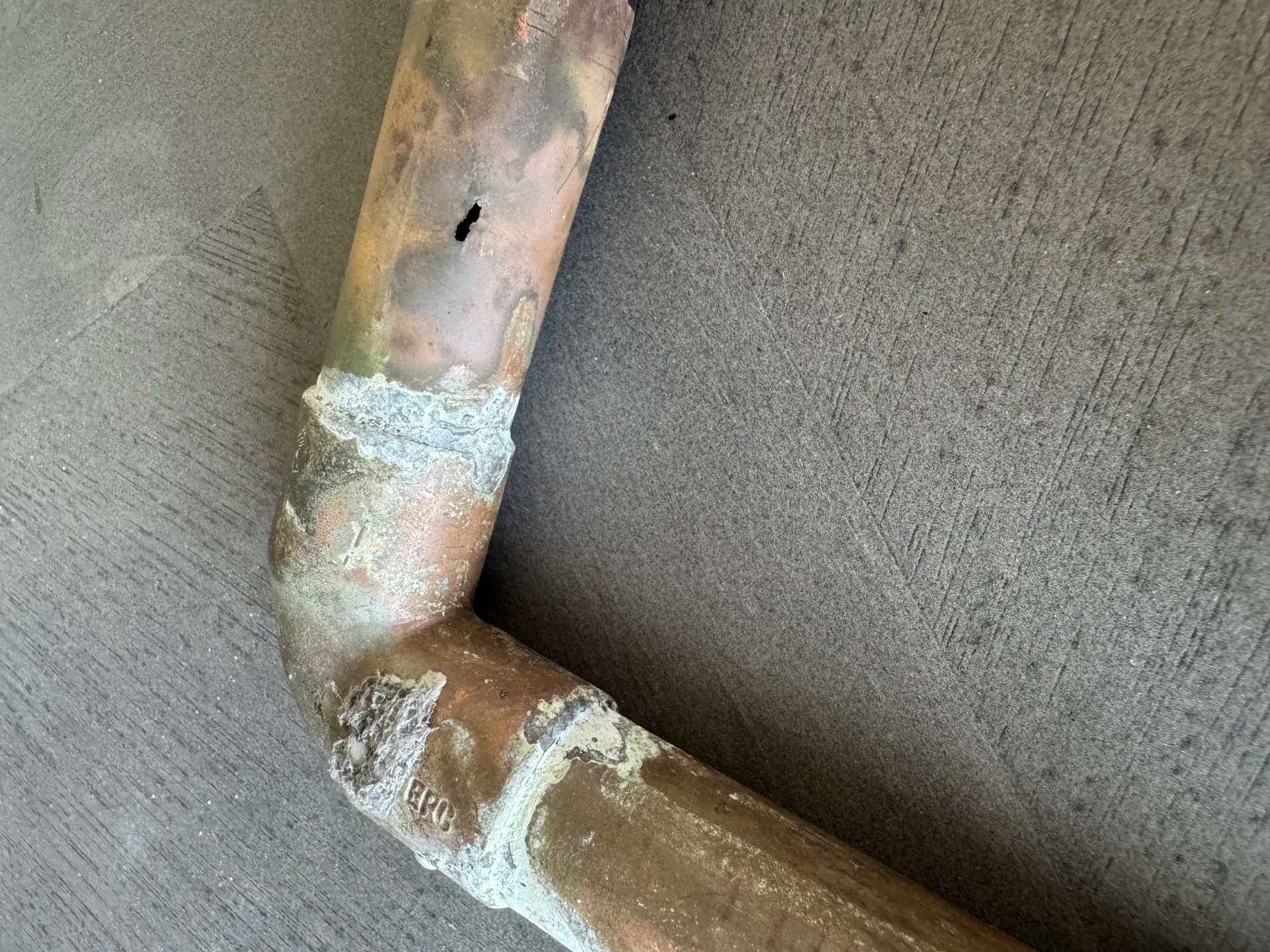
Pinhole leaks don't happen randomly. They start at the elbows and fittings, and the type of copper pipe behind your walls decides how fast.
If you've ever dealt with a mysterious pinhole leak dripping from inside a wall or ceiling, you know how frustrating and destructive it can be. It's a problem we see often in Pigeon Forge homes, and one of the biggest factors behind these leaks, and one of the least talked about, is the type of copper pipe used in the first place.
In Sevier County, Type M copper (the thinner-walled option) is technically permitted for certain applications. But permitted isn't the same as recommended. Here's why we don't use it on Pigeon Forge homes, and why the choice matters more than most homeowners realize.
Copper Pipe Isn't All the Same Thickness
Copper water pipe comes in a few wall thicknesses, most commonly Type K, Type L, and Type M, from thickest to thinnest. The pipes can look identical from the outside and connect with the same fittings, so once a wall is closed up, there's no visual way to tell which type was installed.
That thickness difference matters because copper relies on a thin protective layer of minerals and oxidation that forms on the inside of the pipe. That layer is what actually protects the copper from the water flowing through it. The thinner the pipe wall, the less material stands between a compromised spot and a full leak.
How Turbulence Starts the Problem
Water moving through a straight run of pipe is relatively calm. But every elbow, tee, valve, or fitting changes the direction and speed of the water, creating turbulence and small, swirling eddies right at and just past that point.
That turbulence does two things:
* It wears away the protective mineral layer faster than it can rebuild itself
* It exposes bare copper to the full force of the water flow
Once that protective layer is gone in one specific spot, the copper underneath corrodes much faster than the rest of the pipe. Instead of gradual, even wear, you get a concentrated point of attack, and eventually that turns into a pinhole leak. This is why pinhole leaks so often show up a few inches downstream from a fitting rather than in the middle of a straight pipe run.
Water Quality Speeds It Up
Turbulence creates the vulnerable spot. Water quality determines how fast that spot fails, and this is where local conditions matter too. Pigeon Forge's water supply, like much of Sevier County, has its own mineral profile that plays into this.
Total dissolved solids (TDS): Water carrying higher levels of dissolved minerals and salts, particularly chlorides, is more aggressive toward copper. Those minerals can break down the protective layer even faster once turbulence has already weakened it.
Particulates: Sand, sediment, or scale in the water act almost like sandpaper in the areas where flow is already turbulent, physically wearing away the pipe's interior.
On thicker Type K or Type L pipe, that combination of turbulence and water quality still causes wear, but there's more copper wall thickness to wear through before it becomes a leak. On Type M pipe, that same wear can punch through years sooner, sometimes even within the manufacturer's own labeled service life.
Why It Still Gets Used
If Type M copper is more prone to failure, why is it installed at all? Simply put: it's cheaper, and it's technically allowed in some applications, so it's technically defensible for a plumber to install it.
The problem is that the finished product looks exactly the same behind a wall. The homeowner has no way to know which type was used unless they ask, and most people don't know to ask.
That gap is exactly where cutting corners can quietly boost a plumbing company's margins at the customer's future expense.
Our Approach
We don't install Type M copper on Pigeon Forge homes, even where it's code-permitted. On a repipe or new installation, the up-front cost difference between pipe types is small compared to what a homeowner pays later in water damage repair, drywall replacement, and the plumbing repair itself if a pinhole leak develops.
If you're a Pigeon Forge homeowner planning a repipe, dealing with recurring pinhole leaks, or just want to know what type of copper is in your home's walls right now, we're happy to take a look and walk you through your options honestly.
Case Photos & Videos
Review the visual evidence from this project.