When the Leak Shows Up on the Cold Side, the Water Heater Is Still the Cause
A pipe let go clean off an elbow in a Sevierville ceiling, no visible defect. We found it without adding more water damage, no shortcuts.
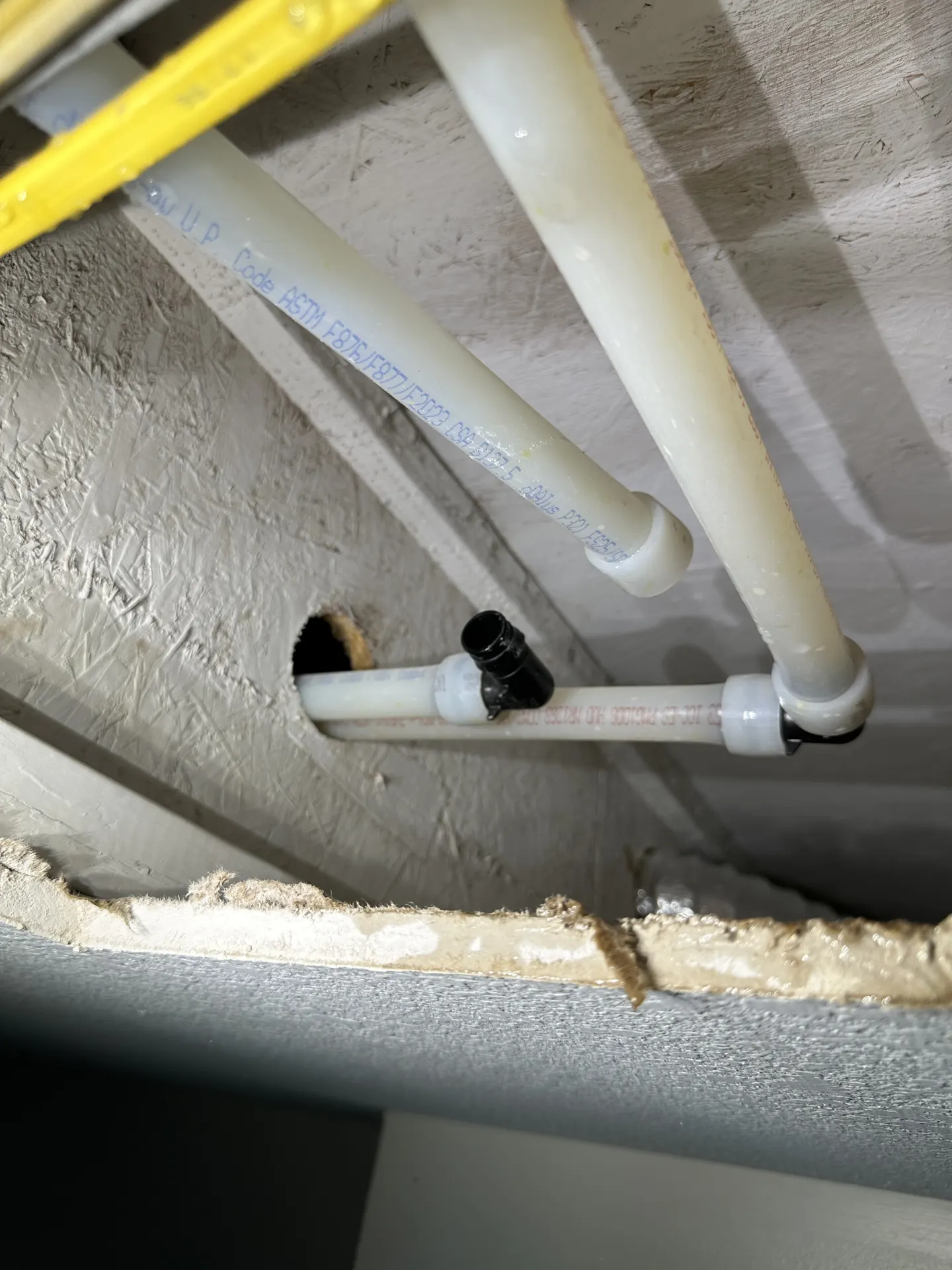
A home outside Sevierville called us after water came through the ceiling. By the time we arrived, the homeowner had already shut off the main, which stopped the damage but also left us with no visible flow to trace back to a source. The line feeding the water heater had separated completely at an elbow joint above the ceiling, but with the water off, there was nothing to point us to exactly where.
Finding it without making it worse
The common approach at this point, and one plenty of plumbers use, is to turn the water back on and watch for the leak to show itself again. We don't do that. Repressurizing a line above a finished ceiling to see where it drips means risking a second flood just to confirm what you already suspect. If the leak is worse than expected, or in a spot that takes longer to spot than planned, that decision costs the homeowner more ceiling.
Instead, we isolated the affected line and put air into it under pressure. Air escaping a break is easier to locate without adding a drop of water to a ceiling that's already compromised, and it let us narrow down the location before opening anything up. Once we had the location, we opened the sheetrock there and only there, instead of chasing a wet spot across a wider section of ceiling.
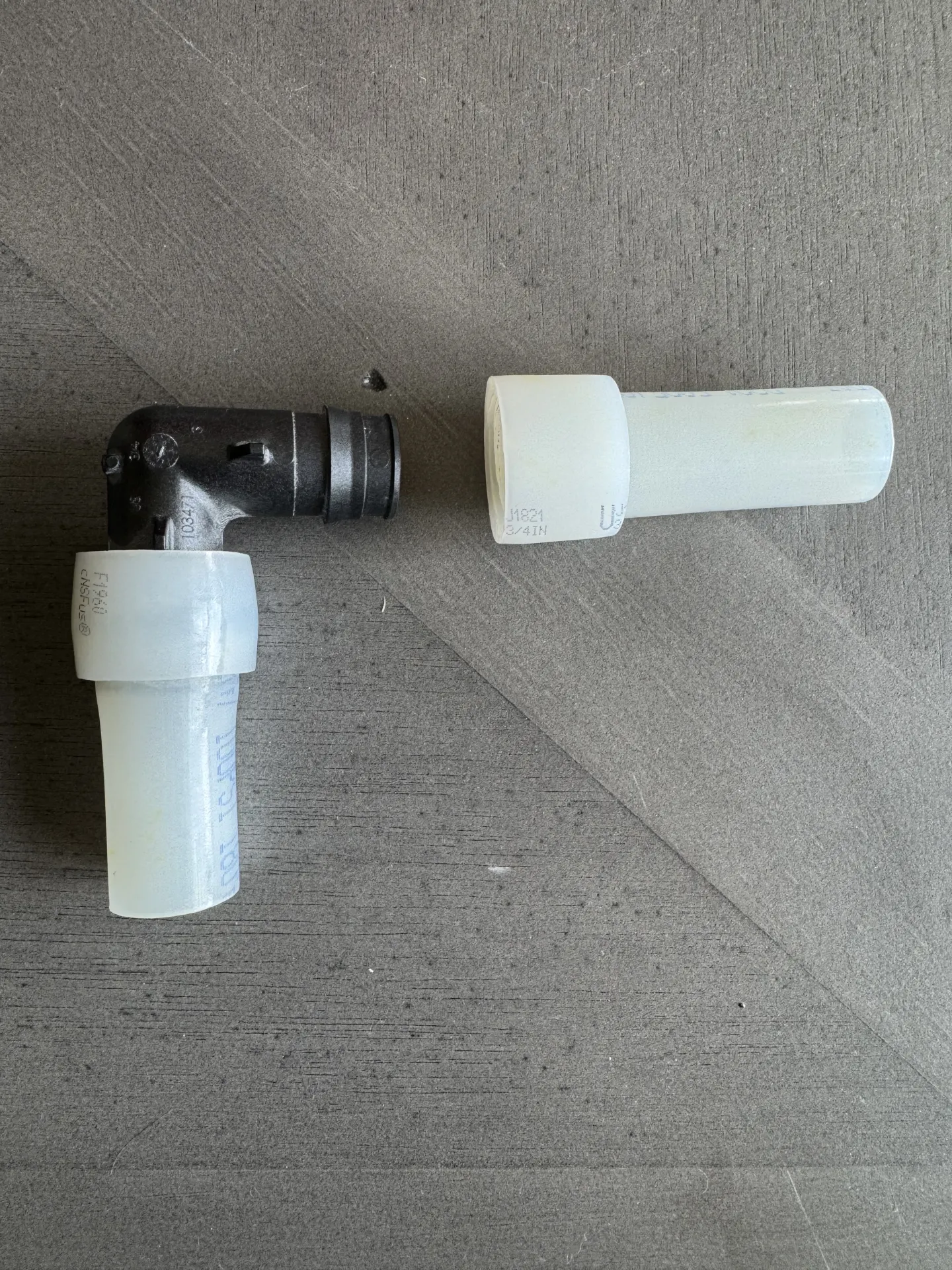
The pipe had popped clean off a ProPEX elbow, a connection method we trust and use ourselves. No cracked ring, no scorch mark, no visible sign of a bad seat, just a joint that let go. That distinction matters for the rest of this, because the fix wasn't "replace bad parts with better parts." It was closing a gap in the system that had nothing to do with the quality of what was installed.
What a closed system actually means
Most homes built or re-plumbed in the last couple decades have a check valve, backflow preventer, or pressure-reducing valve where the water line enters the house. That device is a one-way gate. It keeps water from flowing backward into the street main, which utilities require. It also means the house side of that valve no longer has anywhere to push water back to.
That's what "closed system" means in plumbing terms. It has nothing to do with whether pipes are exposed or hidden. It means there's exactly one direction water can move.
Where the pressure spike comes from
Water doesn't compress. When a 40-gallon water heater fires and brings a full tank up to setpoint, the water inside expands by roughly half a gallon. In an open system, that extra volume just pushes back out toward the main. In a closed system, it has nowhere to go, so the pressure inside the entire house system rises instead, not just inside the tank.
Documented cases in systems without an expansion tank show pressure spikes climbing past 140 psi on a routine heating cycle. That spike isn't contained to the hot side. It travels through the whole closed loop, cold branches included, because the check valve at the meter is the only thing keeping the pressure in, and it doesn't care which line the water came from.
That's the piece that explains a cold-side failure.
Why the fitting held as long as it did
PEX-a pipe like the kind this home was plumbed with carries a continuous rating of 100 psi at 180°F under ASTM F876. Manufacturers also list a short-term excursion allowance, typically 150 psi at 210°F for limited duration. That's a permitted ceiling for occasional upset conditions, not a number a system should be leaning on every time the water heater cycles.
Minimum burst pressure at 180°F runs around 290 psi, close to three times the continuous rating. That margin is why a single pressure spike rarely blows out sound PEX or a properly expanded ProPEX joint outright. What it does instead is add stress, cycle after cycle, for as long as the system keeps spiking.
We didn't find a defect at the joint that popped, which means we can't say with certainty whether this was pure cyclic fatigue from repeated pressure spikes, an installation issue that left no visible trace, or some combination of both. What we can say is that a closed system with no expansion tank was subjecting that joint, and every other joint downstream of the meter, to a stress it wasn't designed to absorb on a daily basis. Removing that repeated stress removes the question, regardless of which explanation is right.
The code has required this for a long time
Thermal expansion control isn't a new line item. It's been in the International Plumbing Code since the code's earliest editions, carried through every cycle since, and it applies at water heater replacement, not only at new construction. If a closed system already exists and a heater gets swapped without adding expansion control, that's a miss at the point where it should have been caught.
Permitted and recommended aren't the same question here either. A short-term pressure excursion being permitted by the pipe manufacturer doesn't mean a system should be designed to hit that ceiling on a regular basis. Code requires the control device precisely because leaning on the pipe's tolerance instead of managing the pressure isn't a sound long-term plan, even where it's technically within a rated limit.
What we did
We repaired the failed connection and tested the rest of the PEX and ProPEX fittings in the system, all of which held sound. We recommended installing a properly sized, precharged expansion tank on the cold supply to the heater, set to match the home's static pressure, so the expanding water has somewhere to go besides the pipe walls. The homeowner opted to hold off on that for now.
PEX-a pipe has a property called shape memory. Once it's expanded, it works to shrink back down toward its original diameter. That's the same property that makes a ProPEX connection possible in the first place, and it's also why a joint that's already separated could technically be re-expanded and pushed back onto the same elbow. Some plumbers do exactly that. We don't. The ring that's expanded onto a ProPEX fitting is a single-use component by the manufacturer's own instructions, not something meant to be re-expanded and reinstalled once it's already been seated and separated. We cut the old fitting out entirely and installed a new elbow with a fresh ring on freshly cut pipe.
A quality fitting installed correctly can still take on stress it was never meant to carry, if the system around it isn't managing pressure the way it should. Repairing the fitting without addressing the pressure problem behind it means the joint that gave way once has company waiting in line.
Case Photos & Videos
Review the visual evidence from this project.