A Deadman's Cleanout Left Unfinished, Wrapped in Duct Tape: What This Photo Really Shows
A crawl space inspection turned up more than a leak. Underneath a flexible coupling was a repair someone clearly hoped no one would ever see.
Every so often, a crawl space inspection turns up more than just a leak. On a recent service call in Wears Valley, this photo was one of those cases.
What We Found
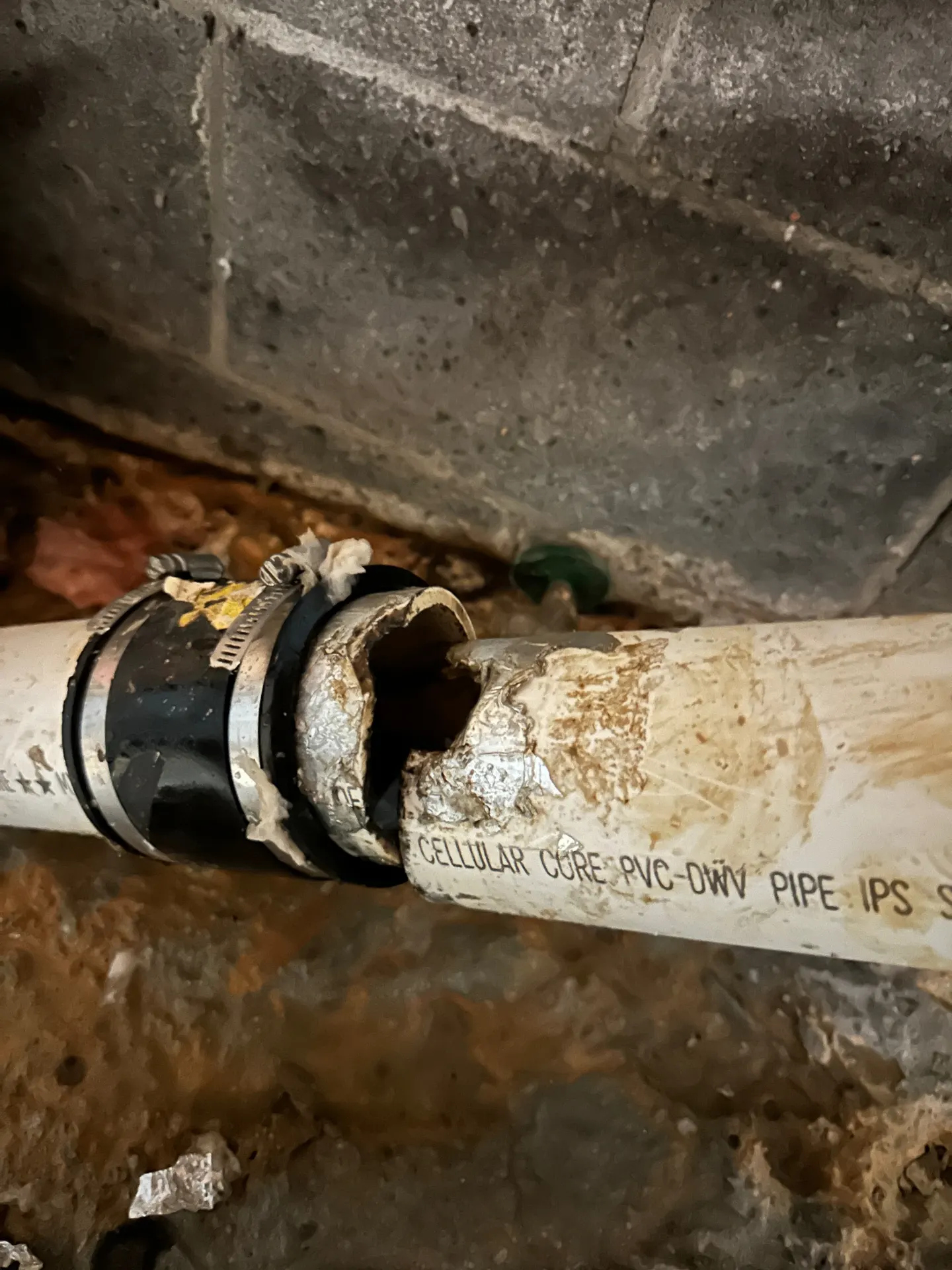
At first glance, this looks like a routine section of cellular core PVC pipe, joined with a mechanical flexible coupling (the black rubber sleeve secured with stainless hose clamps). Pull that coupling back, though, and the story changes.
Underneath is a hole drilled straight into the pipe, wrapped in duct tape, and hidden under the coupling as if it were never there.
What Actually Happened Here
This isn't a manufacturing defect or an installation accident. It's what's known in the trade as a "deadman's cleanout."
Here's how it works. When a sewer line backs up and there's no proper cleanout access on that section of pipe, a plumber can drill a hole directly into the pipe to feed an auger cable down and clear the blockage. It's a real technique, and it can be a legitimate way to get a line moving again in an emergency.
The problem isn't the drilling. It's what's supposed to happen next.
The Right Way to Finish the Job
Once the line is clear, a competent plumber cuts the pipe at that access point and installs a proper PVC test tee with a threaded plug. That gives the homeowner permanent, sealed access to that section of line going forward. If the drain backs up again, there's a real cleanout to open and run a cable through.
That's not what happened here. Instead of cutting in a test tee, someone wrapped duct tape around the hole and slid a flexible coupling over the top of it, banking on the coupling alone to hold back sewage under pressure.
Who Would Do This?
This one narrows things down more than most. Drilling into a sewer line to auger it is not a homeowner move, and it's not something most handyman would know how to do, let alone attempt. This points squarely at a plumber, and specifically one who took a shortcut on the finishing step.
Running the auger and clearing the line was the easy part, and it got done correctly. Cutting in a proper test tee afterward takes maybe twenty extra minutes and a few dollars in fittings, but leaving the job in better shape than you found it is the hard part. Skipping it isn't a knowledge gap. It's a decision to save time on a call that should have ended with a permanent, sealed repair.
Why This Matters
Duct tape has no business anywhere near a pressurized or gravity-fed drain line. It's not rated for it, it doesn't bond to wet PVC, and it certainly isn't designed to hold back sewage. The flexible coupling clamped over it may look like a fix from the outside, but structurally, that hole is sealed by tape and hope.
This particular shortcut happened to be found in a crawl space, which is about the best-case location for something like this to fail. A slow leak there might go unnoticed for a while, but it's not sitting under a finished floor or inside a wall cavity where it could cause real structural damage, sewage contamination, or mold growth before anyone spots it.
That's really the takeaway here.
The cost of doing it right the first time, with a real cleanout fitting, is almost always less than the cost of finding out the hard way what a strip of duct tape wasn't built to hold back.
Case Photos & Videos
Review the visual evidence from this project.